- Login
- Sign Up

Automation is the master conductor, orchestrating a symphony of machines and processes to achieve unparalleled efficiency and productivity.
The global industrial automation market is projected to reach $200 billion by 2025, highlighting the need for advanced control valve technologies.
Industrial automation relies on cutting-edge control valves to regulate flow, pressure, and temperature with pinpoint accuracy.
By leveraging advancements in materials, design, and digital technologies, manufacturers can fine-tune their control valves to achieve a harmonious balance of performance, safety, and cost-effectiveness.
The integration of advanced control valve technologies and automation is revolutionising industrial processes, enabling greater efficiency, precision, and reliability.
By leveraging these innovative solutions, industries can minimise downtime, reduce energy consumption, and improve overall productivity.
As a result, companies can stay competitive in an ever-evolving market landscape.
The future of industrial operations hangs in the balance, as the seamless fusion of human expertise and automated intelligence redefines the manufacturing paradigm.
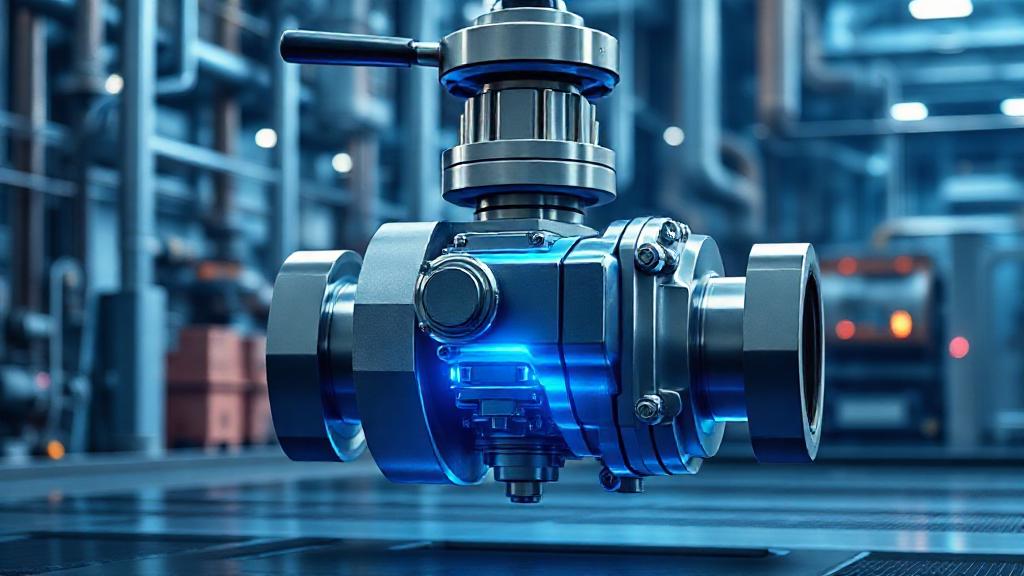
Electric actuators have emerged as a popular choice for light-duty valve applications, offering a unique blend of precision, reliability, and energy efficiency.
They provide a high degree of control and flexibility, making them an attractive option for industries where accurate fluid flow regulation is crucial.
By leveraging advanced materials and designs, electric actuators can minimise energy consumption while maintaining consistent performance.
The use of pneumatic actuators in fluid flow regulation offers several advantages, including high precision and reliability, as well as low maintenance requirements.
Additionally, compact designs can be easily integrated into existing systems, making it easier to upgrade or modify production lines without disrupting operations.
The compact design of pneumatic actuators also allows for greater flexibility and adaptability in various applications, from chemical processing to pharmaceutical manufacturing.
The integration of hydraulic actuators with heavy-duty process valves is a game-changer in the industry, allowing these valves to operate with precision and reliability in demanding applications.
By leveraging the high actuation forces provided by hydraulic actuators, these valves can maintain tight shut-off, regulate flow rates with pinpoint accuracy, and withstand the rigours of frequent cycling.
The use of hydraulic actuators facilitates the implementation of advanced control systems, which can be fine-tuned to optimise valve performance, reduce energy consumption, and predict potential maintenance needs.

The integration of electro-hydraulic actuators and diagnostic technologies has revolutionised the way industries approach precision and maintenance.
By leveraging these advancements, companies can significantly reduce downtime and increase overall efficiency.
The combination of electro-hydraulic actuators and diagnostic technologies offers a range of benefits, including improved reliability and reduced energy consumption.
By leveraging technology, businesses can streamline their operations and minimise disruptions.
Industrial fluid systems are complex networks that require meticulous maintenance and monitoring.
Safety protocols — such as regular inspections and emergency shutdown procedures — must be implemented to prevent accidents.
A well-designed system can minimise the risk of human error by automating tasks and reducing the need for manual intervention.
Traditional maintenance scheduling methods are often viewed as the most effective way to minimise downtime, but this approach can actually lead to unnecessary repairs and increased costs.
In contrast, companies that have adopted condition-based maintenance programs have seen significant reductions in maintenance costs and downtime.
As industries continue to evolve, the integration of advanced automation technologies has become a crucial aspect of maintaining seamless operations.
The implementation of these technologies, such as artificial intelligence and machine learning, enables industries to optimise their processes, reduce errors, and improve overall productivity.
Auditing facilities play a vital role in ensuring the effectiveness and reliability of these automated systems, providing a framework for identifying areas of improvement and implementing corrective measures.
The role of advanced control valve technologies will undoubtedly continue to evolve and improve, driving greater efficiency, productivity, and innovation in various sectors.
The seamless integration of these technologies will pave the way for more sophisticated and adaptive systems, capable of responding to complex challenges and opportunities.
With the potential to transform industries and revolutionise the way we approach manufacturing and processing, the impact of advanced control valve technologies will be felt for years to come.
The future of industrial automation will be written in the language of precision, innovation, and progress, with advanced control valve technologies playing a vital role in scripting this narrative.