- Login
- Sign Up

Power generation facilities are the backbone of modern society, providing the energy needed to power homes, businesses, and industries.
These facilities are complex systems that require careful management and maintenance to ensure they operate efficiently and safely.
The integration of intelligent valve automation and control systems is crucial for enhancing productivity and safety in power generation facilities.
By leveraging advanced technologies such as artificial intelligence, Internet of Things (IoT), and data analytics, these systems can increase productivity and safety in power generation facilities, making them more efficient, reliable, and sustainable.
The integration of intelligent valve automation systems in power generation facilities has revolutionized the way these plants operate, offering enhanced efficiency, reliability, and safety.
These systems enable real-time monitoring and control of valve operations, allowing for quick identification and resolution of issues, and minimizing the risk of accidents and downtime.
Increased productivity through automated valve control and monitoring is a key benefit of these systems.
Improved safety protocols are also achieved through real-time monitoring and predictive maintenance, reducing the risk of accidents and downtime.
By minimizing energy waste and optimizing processes, intelligent valve automation systems can also contribute to reduced environmental impact.
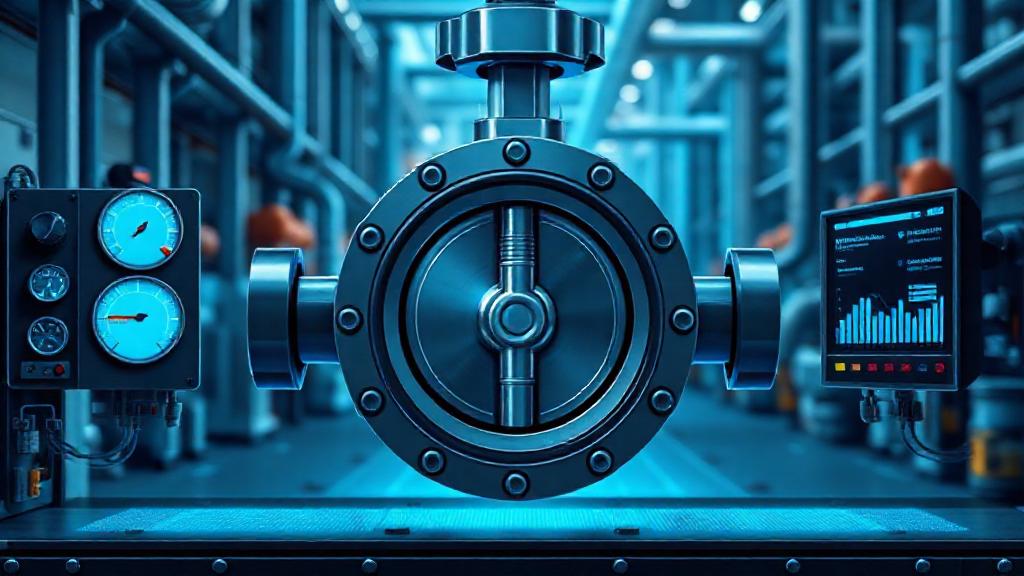
Automated industrial valve control mechanisms can help achieve efficient operations by regulating flow rates, pressure, and temperature with greater precision, reducing the risk of errors and downtime.
This technology enables real-time monitoring and control, allowing for data-driven decisions and improved overall process optimization.
With the right automation solutions, significant improvements in efficiency, productivity, and profitability can be unlocked.
The integration of sensors and data analytics in smart valves enables real-time monitoring of valve performance and detection of potential issues, allowing for predictive maintenance scheduling and minimizing downtime.
This results in significant cost savings and improved efficiency, as well as enhanced safety and reduced environmental impact.
The use of smart valves with integrated sensors and data analytics also enables companies to optimize their maintenance schedules and extend the lifespan of their valves.
The integration of industrial automation valve systems has revolutionized the way industries approach fluid control, optimizing flow rates, reducing energy consumption, and minimizing environmental impact.
By leveraging advanced technologies such as artificial intelligence, Internet of Things (IoT), and data analytics, these systems can detect even the slightest anomalies in the flow, allowing for real-time adjustments and precise control.
This level of precision not only reduces energy waste but also minimizes the risk of accidents and spills, creating a safer working environment for employees and a reduced carbon footprint for the company.
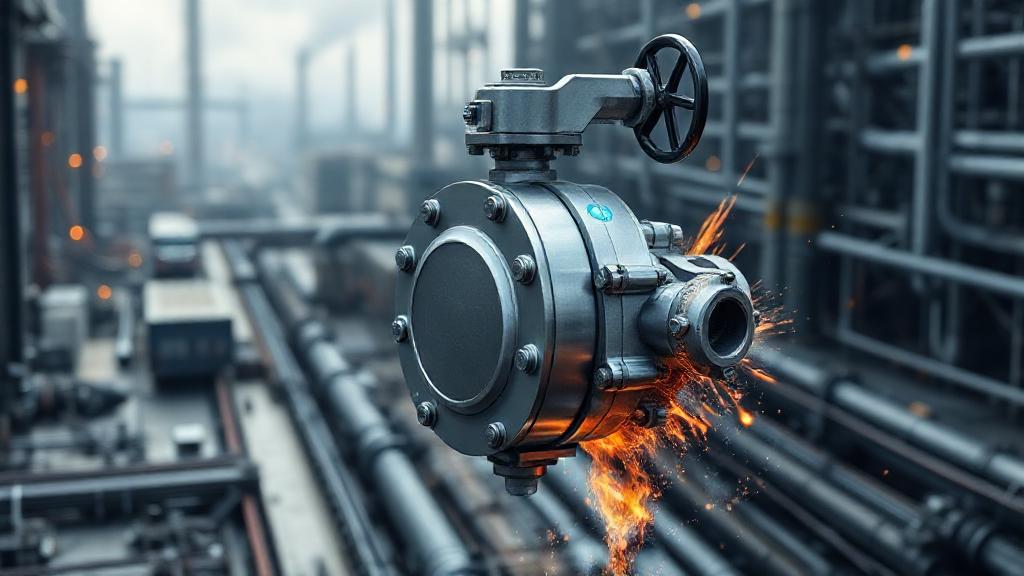
The use of advanced materials and designs in automated valves has significantly enhanced their durability and corrosion resistance in harsh industrial environments.
These innovative valves are capable of withstanding extreme temperatures, high pressures, and corrosive substances, making them ideal for applications in chemical processing, oil and gas, and power generation.
The implementation of cutting-edge technologies, such as 3D printing and nanotechnology, has enabled the creation of complex valve designs with improved performance and reliability.
Implementing smart valve technology is crucial for modern power generation facilities, but it requires careful consideration of upfront costs and cybersecurity protocols.
Ensuring reliability and efficiency in operations through real-time monitoring is a key benefit of smart valve technology.
Mitigating potential cyber threats with robust security protocols is also essential for maintaining the security and integrity of operations.
To achieve optimal performance, a thorough analysis of the system’s requirements is necessary, including the selection of suitable actuator types and communication protocols.
The selection of a suitable actuator type is crucial for ensuring the reliability and safety of the entire system.
A deeper understanding of the system’s dynamics, considering factors like torque, speed, and precision, is essential for making informed decisions.
Automated valve control systems actually create a safer working environment for employees by reducing the risk of exposure to hazardous materials.
The use of automated valve control systems can reduce the risk of process disruptions by up to 70%.
Manual valve operation can lead to human error, resulting in process disruptions and even accidents.
When it comes to selecting the right automated valve system for power generation facilities, a thorough evaluation of application prerequisites and maintenance requirements is crucial.
The process involves considering factors such as flow rates, pressure drops, and temperature ranges to determine the appropriate valve size and type.
Choosing the correct automated valve system can significantly impact the overall efficiency, reliability, and safety of power generation facilities, making it a critical decision that requires careful consideration and evaluation.
The integration of intelligent valve automation and control systems will remain a crucial factor in enhancing productivity and safety in power generation facilities.
The seamless synchronization of these systems will enable facilities to optimize performance, reduce downtime, and minimize the risk of accidents, ultimately leading to a more reliable and efficient energy supply.
The potential for advancements in artificial intelligence and IoT technologies to further enhance valve automation and control systems is vast, and it will be exciting to see the innovative solutions that emerge.
The future of power generation will be shaped by the intelligent automation and control of valves, and it is an exciting prospect to consider the possibilities that this technology will unlock.
The precise control and automation of valves will be the backbone of tomorrow’s power generation facilities, working tirelessly behind the scenes to ensure a brighter, more sustainable energy future.