- Login
- Sign Up

As the world shifts towards a more sustainable future, the humble electric motor is undergoing a revolution, transforming from a reliable workhorse to a high-performance powerhouse.
With over 40% of global electricity consumption attributed to electric motors, the potential for innovation is vast, and the stakes are high.
Imagine a world where electric motors are not just efficient, but also intelligent, adaptive, and resilient.
The key to unlocking this vision lies in the convergence of advanced materials and control algorithms, which are being leveraged to redesign electric motors from the ground up, enabling them to operate with unprecedented precision, speed, and durability.
The pursuit of enhanced electric motor efficiency has led to the development of innovative materials and cooling systems, transforming the industry with improved performance and reduced energy consumption.
As researchers continue to push the boundaries of technology, advanced composite materials and novel cooling techniques have emerged as key players in optimizing electric motor efficiency.
The integration of these cutting-edge solutions is poised to revolutionize the field of electric motors.
The future of electric motors hangs in the balance, as the discovery of new materials and cooling methods could either make or break the industry’s quest for unprecedented efficiency.

The key to overcoming challenges in balancing power density and reliability lies in the implementation of advanced control algorithms, which can optimize motor performance, reduce energy consumption, and predict potential faults.
By leveraging these algorithms, more robust and reliable electric motors can be created that meet the demands of various applications.
Advanced control algorithms can be tailored to specific motor designs, allowing for greater flexibility and customization.
A notable example of AI’s impact is the development of the Tesla Model S, where AI-optimized electric motors achieved unparalleled efficiency and performance, reducing energy consumption by up to 10%.
The integration of AI in electric motor design enables the creation of highly customized and optimized motors, tailored to specific applications and use cases.
The use of AI in electric motor optimization also enables real-time monitoring and control, allowing for dynamic adjustments to be made to the motor’s operating parameters to ensure maximum efficiency and performance.
The integration of Internet of Things (IoT) technology with electric motors is revolutionizing the landscape of industrial automation and renewable energy.
By leveraging IoT-enabled smart electric motors, industries can optimize their operations, predict maintenance needs, and reduce energy consumption, thereby minimizing their carbon footprint and contributing to a more sustainable future.
These smart motors are equipped with advanced sensors and communication protocols, allowing them to transmit real-time data and receive commands.
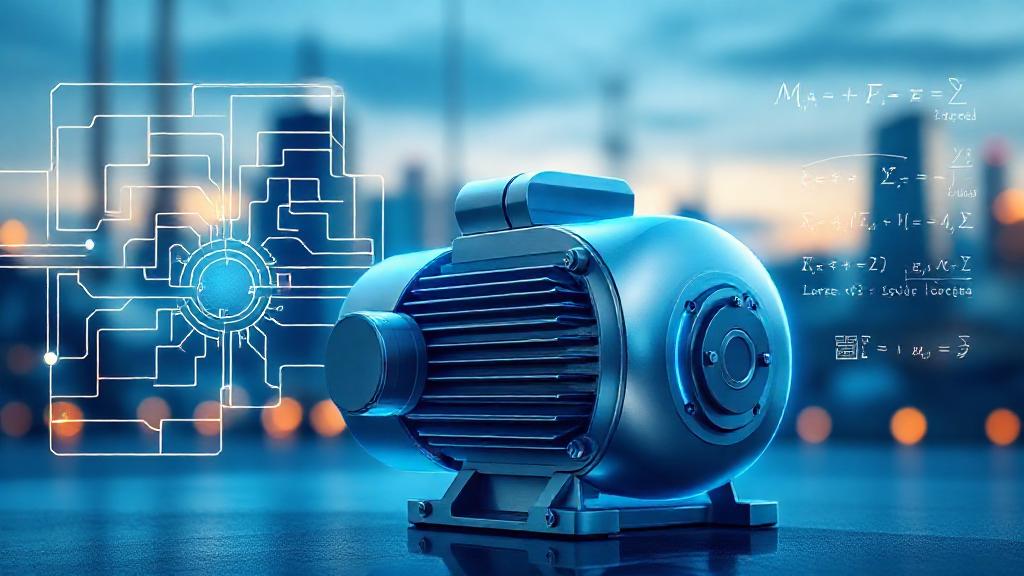
The development of electric motors has undergone significant transformations in recent years, driven by the need for high efficiency and power density.
Researchers have been exploring new materials and designs to improve the performance of electric motors, such as the use of permanent magnets and advanced winding configurations.
The integration of advanced control systems and power electronics has also contributed to the improvement of electric motor efficiency.
The electric motor industry is witnessing a significant transformation with innovative designs and technologies.
The key to unlocking better performance and range in electric vehicles lies in the design of their electric motors.
A well-designed motor can make all the difference in terms of efficiency, power output, and overall driving experience.
Reducing greenhouse gas emissions is a critical step towards a more sustainable future, and it starts with the development of advanced electric motor technologies.
The integration of AI and IoT in electric motor design is transforming the way motors are designed, maintained, and optimized.
Companies like Siemens and GE Appliances are already leveraging AI and IoT to develop smart motors that can predict and prevent failures, reducing downtime and increasing overall efficiency.
The integration of emerging technologies, such as artificial intelligence and the Internet of Things (IoT), is poised to revolutionize the field of electric motor design, enabling the creation of more efficient, compact, and sustainable motors.
Advanced materials like graphene, nanomaterials, and superconducting materials are expected to play a crucial role in enhancing the performance, reliability, and durability of electric motors.
As researchers continue to explore new design architectures and topologies, such as axial-flux and radial-flux motors, the potential for further improvements in power density, torque density, and efficiency is substantial.
The future of electric motor design is intricately linked with the advancement of sustainable technologies, and as the world transitions towards a more electrified and decentralized energy landscape, the demand for high-performance, efficient, and reliable electric motors will continue to grow.
As we stand at the forefront of a new era in electric motor design, the possibilities seem endless, with advanced materials and control algorithms poised to revolutionize the industry.
The integration of cutting-edge technologies, such as artificial intelligence and nanomaterials, is expected to significantly enhance the reliability and efficiency of electric motors, paving the way for widespread adoption in various sectors, from transportation to renewable energy.
With the potential to reduce carbon emissions and increase energy productivity, the future of electric motor design holds great promise, and it will be exciting to see how these innovations unfold and shape the world of tomorrow.