- Login
- Sign Up

Manufacturing today demands unprecedented adaptability. Flexible manufacturing systems (FMS) require components that scale seamlessly with changing production needs.
Scalable motor technology delivers the precision and flexibility essential for dynamic environments. This article explores how scalable motor solutions help manufacturers boost efficiency, cut downtime, and respond rapidly to market shifts.
By integrating modular drives and scalable motors, facilities can optimize their FMS for current demands while future-proofing operations.
In flexible manufacturing, scalable motor technology encompasses electric motors and drives engineered to adapt, expand, or reconfigure as production demands shift. This adaptability is essential for efficiently handling diverse product types and variable batch sizes.
Key attributes of scalable motor systems include:
These features enable manufacturers to adjust production lines quickly without costly downtime, directly supporting the agility required in modern flexible manufacturing environments.
cannot be overstated. Scalable motors allow manufacturing systems to adapt to changing demands quickly and efficiently.
They support variable speeds and torques, enabling seamless transitions between product types.
This adaptability reduces changeover times and enhances overall equipment effectiveness.
Manufacturers can scale production up or down without major overhauls.
Scalable motor technology thus directly contributes to the agility required in modern flexible manufacturing environments.
Incorporating scalable drives and modular designs ensures that the motor system can grow alongside production needs.
Scalable motor drives deliver advantages for flexible manufacturing systems. They enhance agility, reduce energy costs, and simplify expansions.
Rapid reconfiguration allows on-the-fly reprogramming for new product lines. Energy optimization uses variable speed control to cut power waste by matching output to demand.
Modular investment expands drive capacity incrementally as production needs grow. Automation compatibility integrates natively with PLCs, SCADA, and IoT networks.
Simplified maintenance uses standardized components to reduce inventory and training requirements.
These advantages make scalable drives key for smart manufacturing, supporting adaptability, efficiency, and cost control.
Modular motor solutions provide a scalable foundation for flexible manufacturing. These designs are interchangeable building blocks. They can be easily added, removed, or replaced without extensive rework, allowing production capacity to grow incrementally.
To achieve maximum scalability, consider the following implementation strategies:
This approach reduces downtime and simplifies future expansion. It enables manufacturers to align motor capacity precisely with market demands while minimizing capital risk.
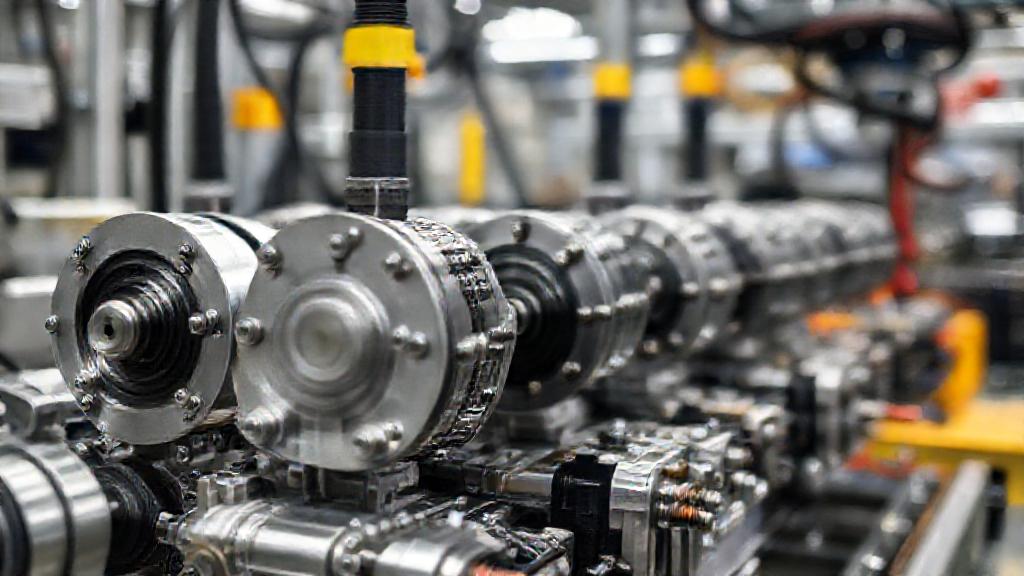
Scalable motor solutions now integrate directly with automation networks and smart factory ecosystems. They support standard communication protocols like PROFINET and EtherCAT, enabling real-time data exchange.
This connectivity allows for predictive maintenance, remote monitoring, and dynamic reconfiguration. Manufacturers can optimize production flows and reduce unplanned downtime.
0 platforms, factories gain the agility to respond to changing demands. Scalable motors become intelligent actuators that enhance overall system flexibility.
Select scalable motors for your FMS with a strategic focus on modularity. Modular designs adjust capacity without costly downtime, enhancing flexibility.
Ensure torque and speed ranges meet current and future production needs.
Choose motors with open communication protocols like EtherCAT or PROFINET for easy integration.
Opt for energy-efficient variable speed drives to lower long-term operational costs.
Select motors with modular construction for simplified maintenance and individual upgrades.
Prioritize vendors that offer robust support for seamless integration and long-term reliability.
Integrating scalable motor systems into existing flexible manufacturing setups often reveals compatibility issues. These problems must be resolved to maintain seamless operation.
Selecting motors with industry-standard interfaces and modular architectures minimizes these risks. A phased integration approach also allows testing before full deployment.
Energy efficiency remains a top priority in flexible manufacturing. Variable speed drives allow motors to run only at required speeds, slashing energy waste. Scalable motor solutions take this further by enabling precise power distribution across production cells.
Key efficiency gains include:
By adopting these technologies, manufacturers can achieve significant energy savings while maintaining production flexibility.
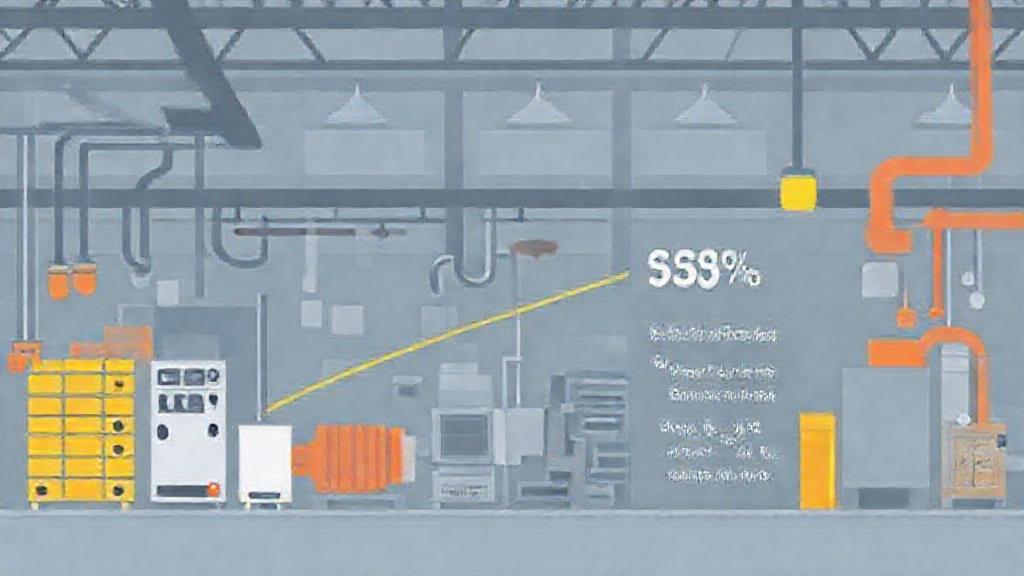
The future of scalable motor technology will be driven by digitalization and intelligent connectivity. IoT-enabled drives will enable real-time performance monitoring and adaptive control.
This allows flexible manufacturing systems to respond instantly to changing production demands.
Advanced materials, such as amorphous metals and rare-earth-free magnets, will improve efficiency and sustainability.
Compact modular designs will simplify integration and scalability across diverse applications.
Digital twins and AI analytics will further enhance motor performance and reliability.
Predictive maintenance based on real data minimizes unplanned downtime and extends equipment life. These innovations are critical for achieving fully flexible, autonomous production ecosystems.
Scalable motor technology empowers flexible manufacturing systems to swiftly adapt to production changes, lower costs, and enhance efficiency. By investing in modular, compatible drives, manufacturers gain long-term scalability and a competitive edge.
Ready to future-proof your operations? Contact MTA’s team to explore our scalable motor solutions tailored to your needs.
Let’s drive your flexible manufacturing forward.